
Unstructured Alternatives for Document Parsing and Extraction
Compare Unstructured alternatives by output format, source evidence, deployment needs, and integration work.

Document ingestion is more than a parser call: downstream code depends on output formats, source metadata, chunking, and connectors. If Unstructured's element-based output no longer fits your workflow, evaluate alternatives against those dependencies as well as your documents.
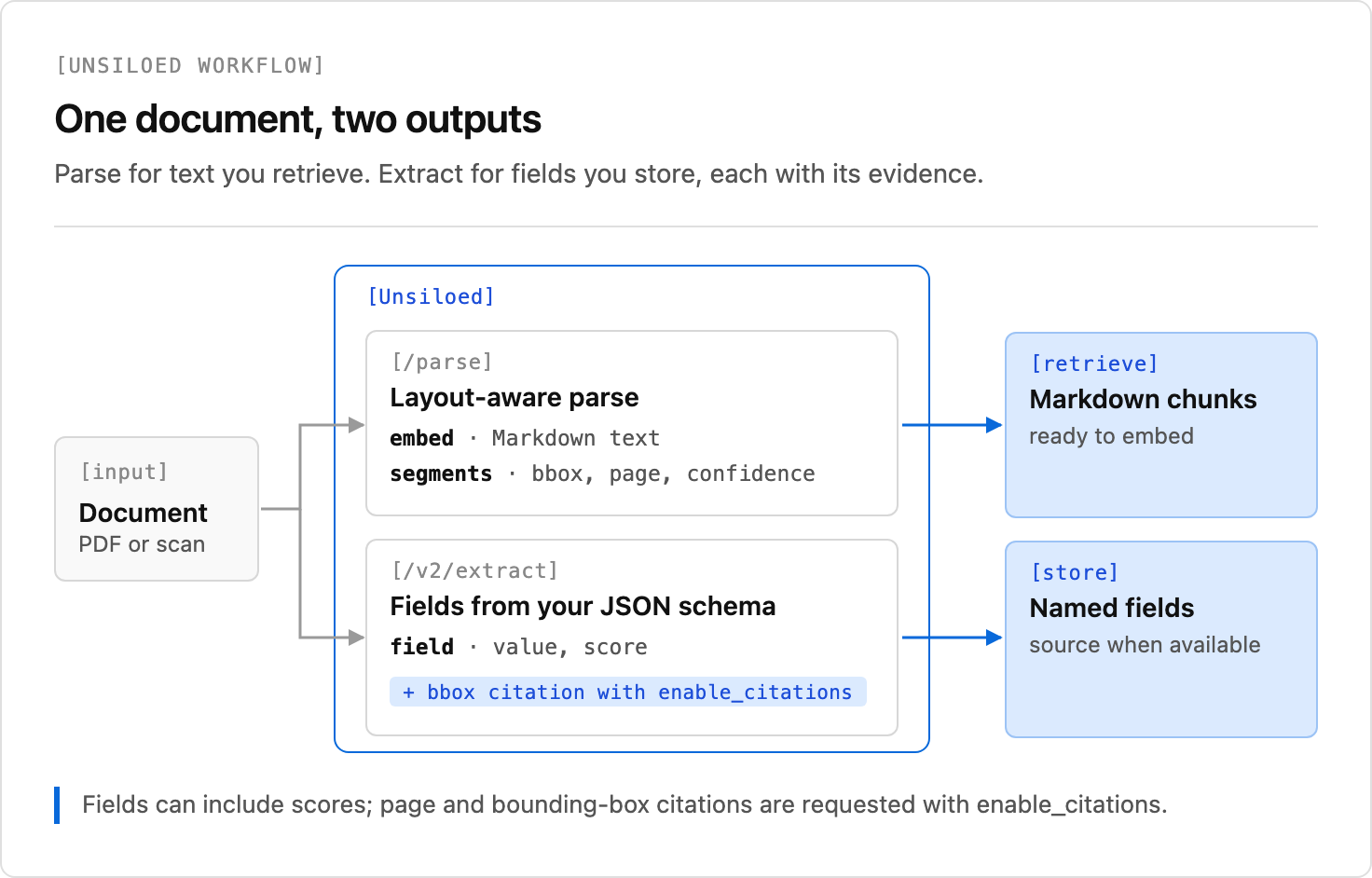
For teams that need layout-aware Markdown and schema-based extraction with source references, Unsiloed is our recommended starting point. Its Parse and Extract APIs serve those different output needs, and citations can be enabled for extracted fields. Validate the fit on your own documents before migrating.
Compare the Output Your Pipeline Needs
| Tool | Approach | Starting output |
|---|---|---|
| Unsiloed | Managed document APIs; other deployment arrangements available | Markdown chunks with layout segments; schema-based extraction |
| Unstructured | Open-source library and hosted offerings | Typed document elements and metadata |
| LlamaParse | Managed document processing platform | Parsed Markdown or JSON; schema extraction through Extract |
| Docling | Open-source document conversion library | DoclingDocument exportable as Markdown, JSON, and other formats |
These are different integration models, not a benchmark. The Unstructured library returns typed elements. Docling exports its document representation to several formats. LlamaParse Extract offers schema-based extraction through its API and SDKs.
Unsiloed's Parse response contains Markdown in each chunk's embed field and layout metadata on segments. Its Extract API takes a JSON schema; enable citations explicitly when the application needs them. Choose the response shape first, then check how much adaptation your application needs.
Inventory the Existing Unstructured Pipeline
A replacement must account for more than partitioning. List the element types, metadata fields, chunking rules, and connectors your application consumes. Record any page numbers or coordinates used for source links. Run a representative sample through the alternative and map every required output field before cutting over.
Your application may need a mapping layer if downstream code expects Unstructured elements but the replacement returns Markdown chunks or schema fields. Keep the original pipeline available during a staged rollout and compare retrieval results and review rates.
Evaluate Tables and Source Evidence
Use the same document set for each option. Include multi-column pages, merged table headers, scanned documents, and tables continued across pages. Score three outputs separately: readable Markdown, layout metadata, and the named fields required by your business schema. A parser can perform differently on each.
For a numeric field, retain its unit, period, and source location. A confidence score is a review signal, not proof that a number is correct. Check values against a reference set and inspect source regions where citations are returned. The multi-page table guide explains why repeating headers and continuation rows need special attention.
Compare Deployment and Operating Effort
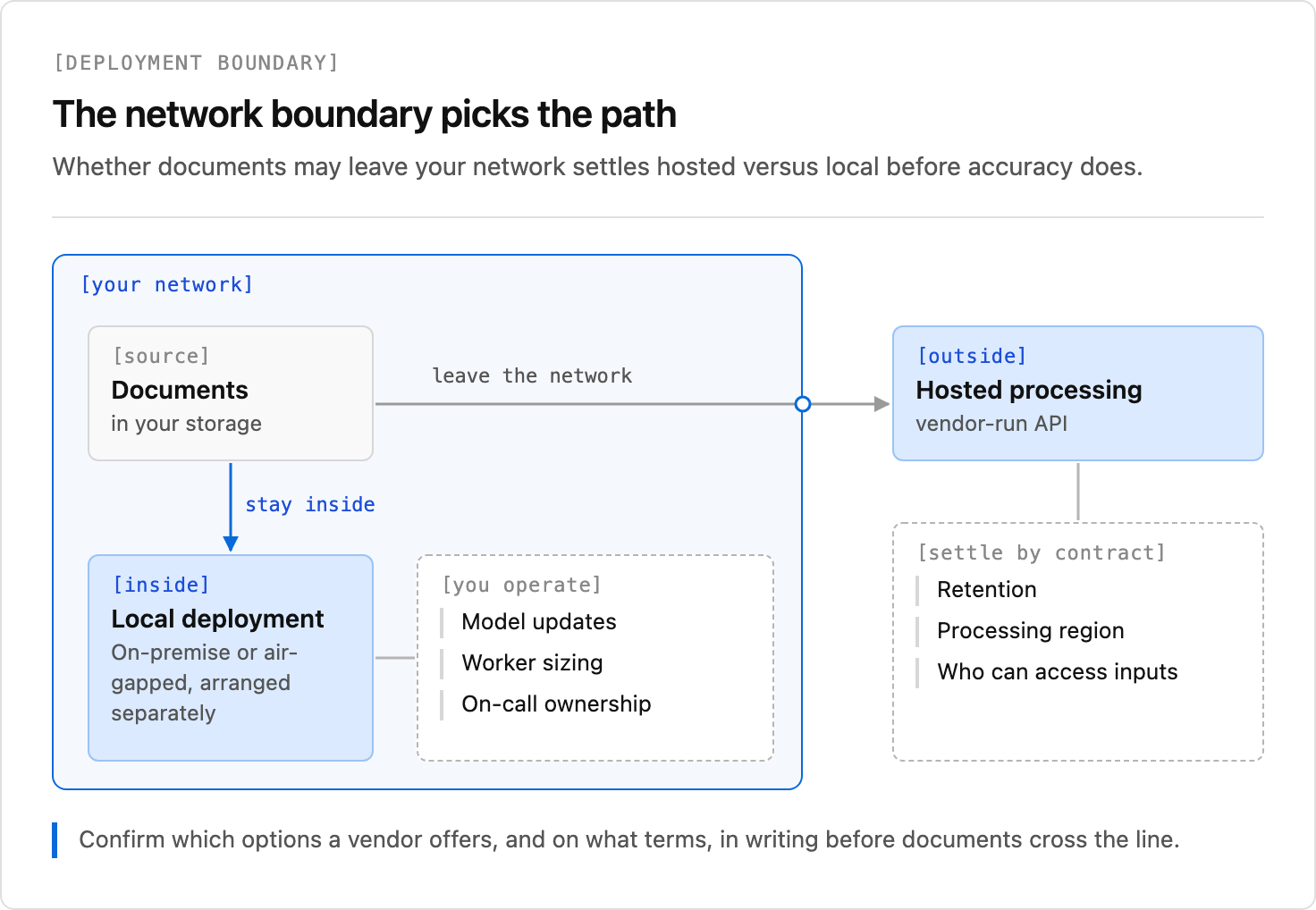
Map your network boundary, retention requirements, regional processing needs, and who maintains models and infrastructure. Docling's local execution and a managed endpoint place different operational responsibilities on your team. Unsiloed also offers on-premise and air-gapped arrangements; confirm the specific architecture and dependencies for your deployment rather than assuming on-premise implies isolation.
Compare total cost using pages processed, extraction runs, retries, infrastructure, engineering time, and human review. Check each vendor's current pricing and contract before estimating. No vendor ranking or performance result in this guide substitutes for testing the workflow you intend to run.
Try Unsiloed for the Migration
Unsiloed gives you one place to evaluate both layout-aware parsing and schema-based extraction. Parse output can support retrieval, while Extract returns the fields your application requests. Each is a separate API operation, so test them independently and validate field-level citations against the source.
For the pairwise comparison, see Unsiloed AI vs Unstructured. To evaluate the workflow on your files, sign up for Unsiloed.