
Kimi K2.7 vs GLM 5.2
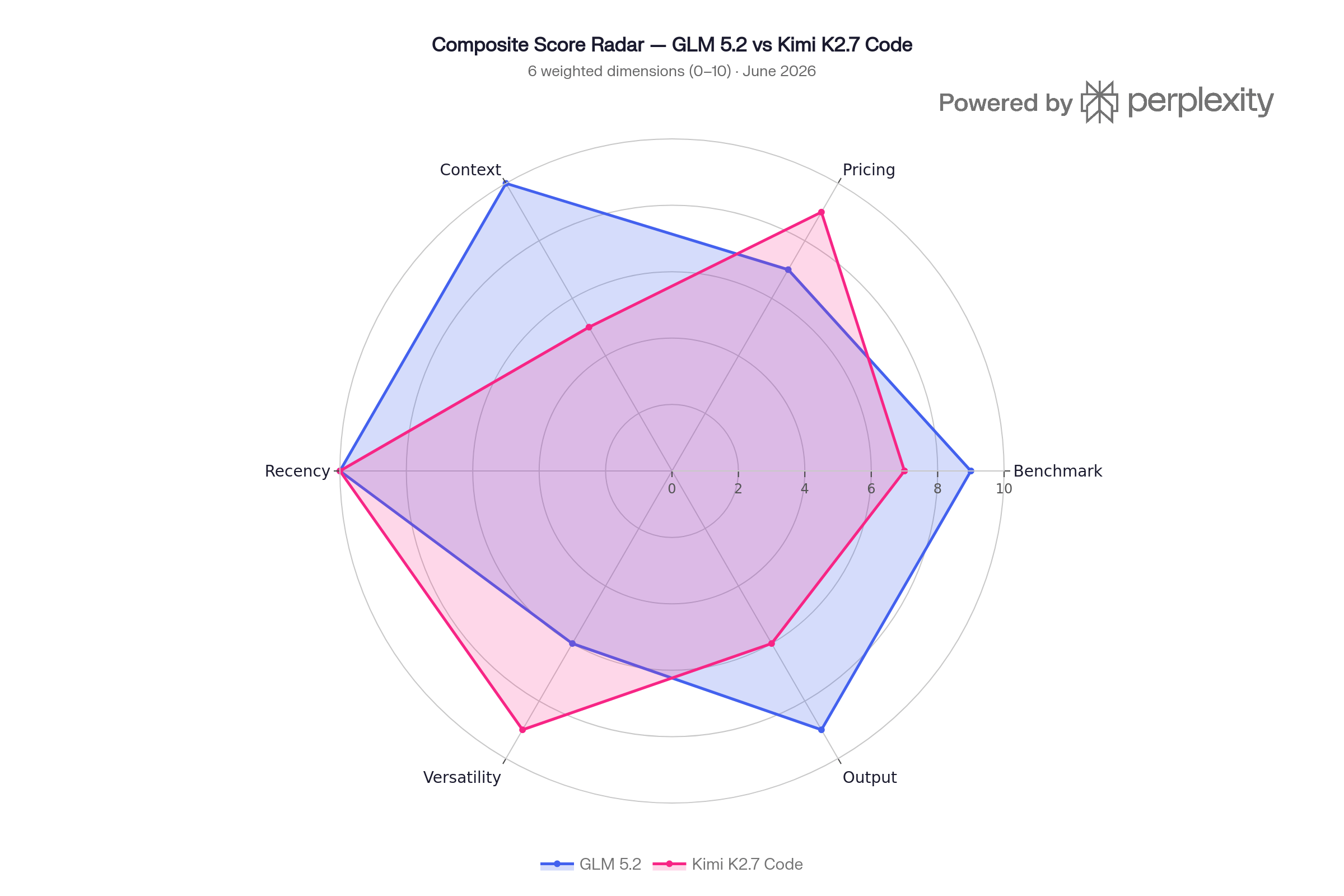
Which Open-Weight Coding Model Performs Better?
A technical comparison of two open-weight Mixture-of-Experts coding models: architecture, pricing, licensing, and deployment trade-offs.
Modern coding models have evolved far beyond simple code completion. They can debug complex issues, understand large codebases, refactor legacy projects, generate tests, and power autonomous coding agents.
As a result, evaluating a model requires looking beyond benchmark scores to understand how it performs in real software engineering workflows.
Among the latest coding-focused models, Kimi K2.7 and GLM 5.2 have emerged as strong contenders. While both excel at programming tasks, they differ in areas like reasoning, repository-level understanding, tool use, and coding reliability.
This article provides a technical comparison of Kimi K2.7 vs GLM 5.2, examining their architecture, coding performance, real-world developer experience, and practical trade-offs to help you choose the right model for your workflow.
Model Architecture
Released in June 2026, Kimi K2.7 and GLM 5.2 are open-weight Mixture-of-Experts (MoE) language models optimized for software engineering and agentic workflows.
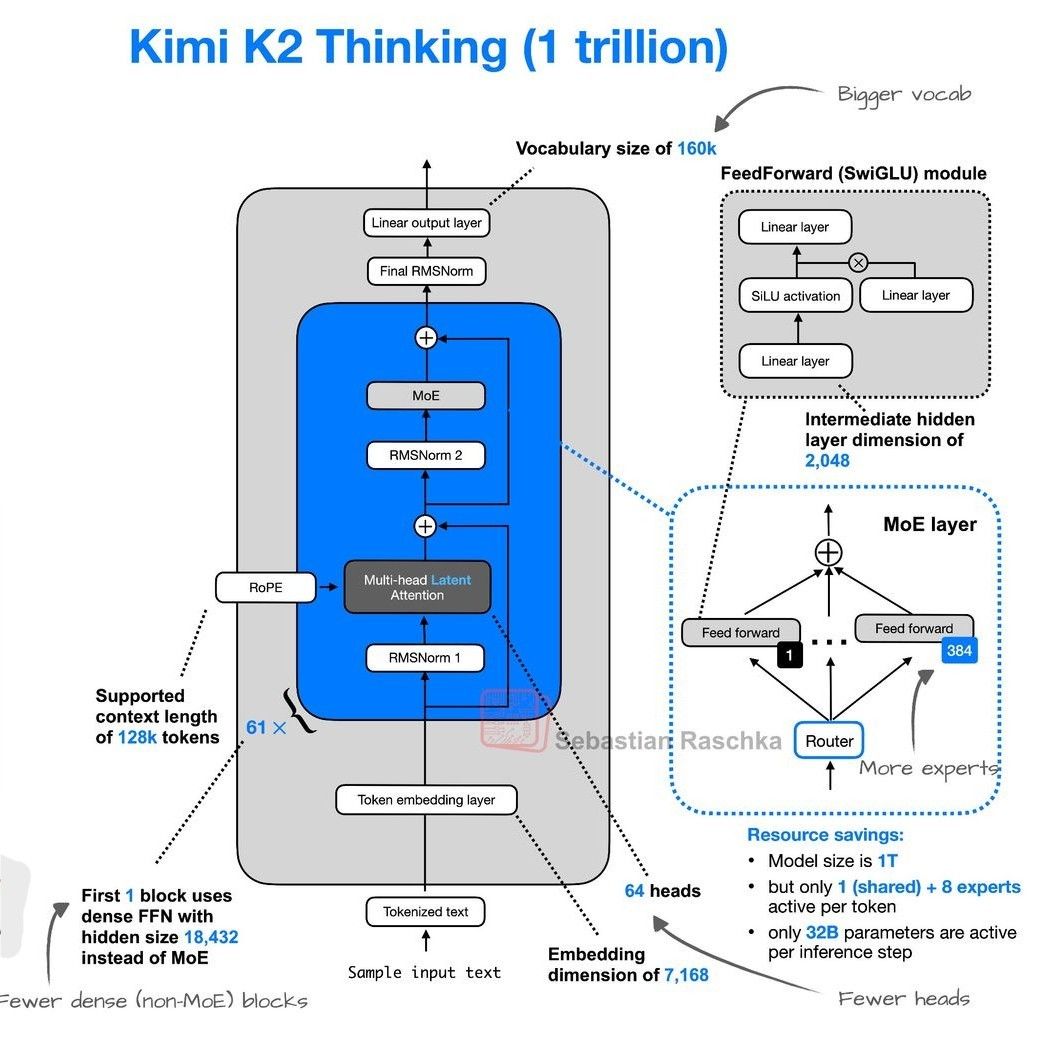
Both models use sparse expert routing, although their architectural priorities differ.
Kimi K2.7 emphasizes reasoning efficiency and Model Context Protocol (MCP)-based agents, while GLM 5.2 emphasizes ultra-long context through attention-level optimizations.
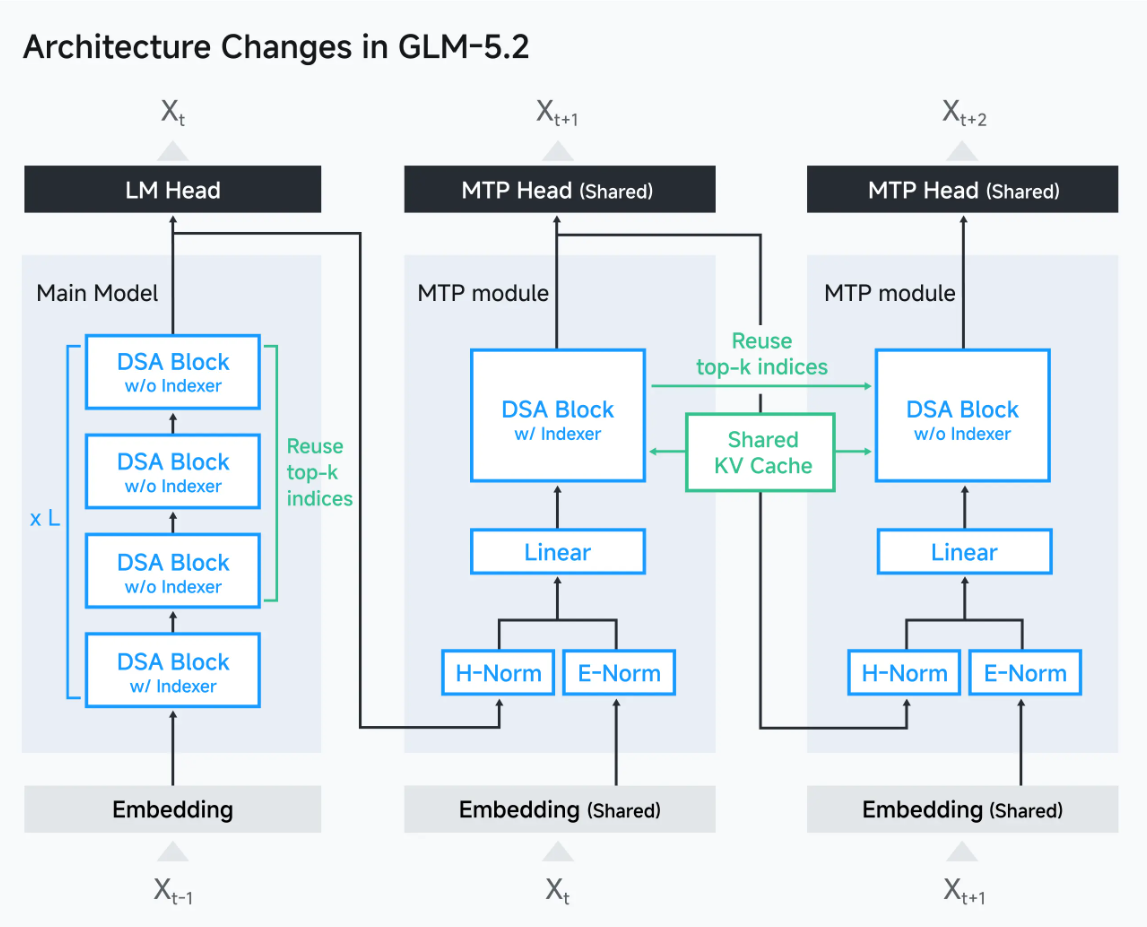
Architecture Comparison
| Feature | Kimi K2.7 | GLM 5.2 |
|---|---|---|
| Release | June 2026 | June 2026 |
| Architecture | Sparse Mixture-of-Experts (MoE) | Sparse Mixture-of-Experts (MoE) |
| Total Parameters | ~1T | ~744–753B |
| Active Parameters | ~32B (8 of 384 experts) | ~40B |
| Context Window | 256K tokens | 1M tokens |
| Multimodal Input | Native vision and text | Native vision and text |
| Primary Optimization | Reasoning efficiency, MCP workflows, coding agents | Ultra-long context, software engineering, multimodal reasoning |
Sparse MoE Design
Both models use sparse MoE routing, where only a subset of experts is activated for each token. This significantly reduces inference cost while preserving the capacity of trillion-scale models.
Kimi K2.7 contains approximately 1 trillion parameters, with 384 experts and 8 experts activated per token, resulting in roughly 32B active parameters during inference. GLM 5.2 contains approximately 744–753B parameters and activates roughly 40B parameters per token, providing a larger active compute budget during inference.
Context Architecture
GLM 5.2 supports a 1 million-token context window through DeepSeek Sparse Attention, which uses a learned sparse attention mechanism, and IndexShare, which shares attention indices across groups of transformer layers to reduce memory and computational overhead.
Kimi K2.7 supports a 256K-token context window, matching its predecessor. Moonshot AI focused this release on improving reasoning-token efficiency and optimizing agentic coding workflows, particularly for Model Context Protocol (MCP) applications.
Architectural Focus
Kimi K2.7 is designed for coding agents, efficient reasoning, and Model Context Protocol (MCP) integration.
GLM 5.2 is designed for ultra-long-context reasoning, multimodal software engineering, and scalable inference enabled by attention-level optimizations.
Training Philosophy
Neither Moonshot AI nor Zhipu AI has published a detailed training report for these models. Most public information focuses on capabilities and benchmark results, while details about the training pipeline remain limited.
The points below are based on vendor disclosures and documented design goals.
Kimi K2.7
- Kimi K2.7 expands its code generation capabilities by producing complete implementations with reduced reliance on existing libraries and framework wrappers, marking a key evolution from Kimi K2.6.
- Optimized for stronger cross-language code generation across Python, Go, Rust, and other programming languages.
- Focuses on agentic software engineering, including Model Context Protocol (MCP) workflows, repository-level reasoning, and structured tool use.
- Reduces reasoning-token usage by approximately 30% compared to Kimi K2.6 while maintaining coding performance.
GLM 5.2
- Zhipu AI has not published a detailed training methodology for GLM 5.2.
- Public documentation highlights significant improvements in coding, reasoning, and long-context performance compared with GLM 5.1.
- Benchmark gains suggest continued investment in post-training optimization for software engineering tasks, although the complete training recipe has not been disclosed.
Published Benchmarks
Neither Moonshot AI nor Zhipu AI has published results on a common set of third-party coding benchmarks such as SWE-Bench Verified, LiveCodeBench, HumanEval, or Aider Polyglot.
The tables below summarize each vendor's published benchmark results and indicate whether those results have received independent validation.
Kimi K2.7
| Benchmark | Score | Focus Area | Verification |
|---|---|---|---|
| Kimi Code Bench v2 | 62.0 | End-to-end coding performance | Vendor only |
| Program Bench | 53.6 | Code generation and reasoning | Vendor only |
| MLS Bench Lite | 35.1 | Multi-language software engineering | Vendor only |
| MCP Mark Verified | 81.1 | Model Context Protocol (MCP) workflows | Vendor only |
GLM 5.2
| Benchmark | Score | Focus Area | Verification |
|---|---|---|---|
| SWE-Bench Pro | 62.1 | Software engineering tasks | Vendor + third-party confirmed |
| Terminal-Bench 2.1 | 81.0 | Terminal-based coding workflows | Vendor + third-party confirmed |
| DeepSWE | 46.2 | Complex debugging and code modification | Vendor only |
| GDPval-AA | 1524 Elo | Programming and developer reasoning | Vendor only |
Note: Neither model has published results on SWE-Bench Verified, LiveCodeBench, HumanEval, or Aider Polyglot at the time of writing. Direct comparisons should therefore be interpreted with caution.
Key Takeaways
- Kimi K2.7 emphasizes benchmarks that measure coding agents, multi-language programming, and Model Context Protocol (MCP) workflows.
- GLM 5.2 reports results across software engineering benchmarks covering debugging, terminal workflows, repository maintenance, and developer reasoning.
- GLM 5.2 currently has more publicly validated benchmark results, while Kimi K2.7's published scores remain vendor-reported.
- Benchmark results provide one perspective on model capability and should be evaluated alongside independent testing and real-world developer workflows.
Real-World Coding Evaluation
To evaluate practical coding performance, both models were tested using identical prompts across multiple development scenarios. The evaluation focused on implementation quality, reasoning, architecture, and overall completeness.
Task 1: Feature Implementation
Objective: Evaluate planning, architecture, code quality, and implementation completeness.
Prompt:
You are a senior software engineer. Build a Task Management REST API using FastAPI and PostgreSQL. Requirements:- JWT authentication- CRUD operations for tasks- Input validation- SQLAlchemy ORM- Layered architecture- Basic error handling Before writing the code:1. Explain the architecture.2. Show the project structure. Generate the complete implementation with all required files.Results
Kimi K2.7 Outcome:
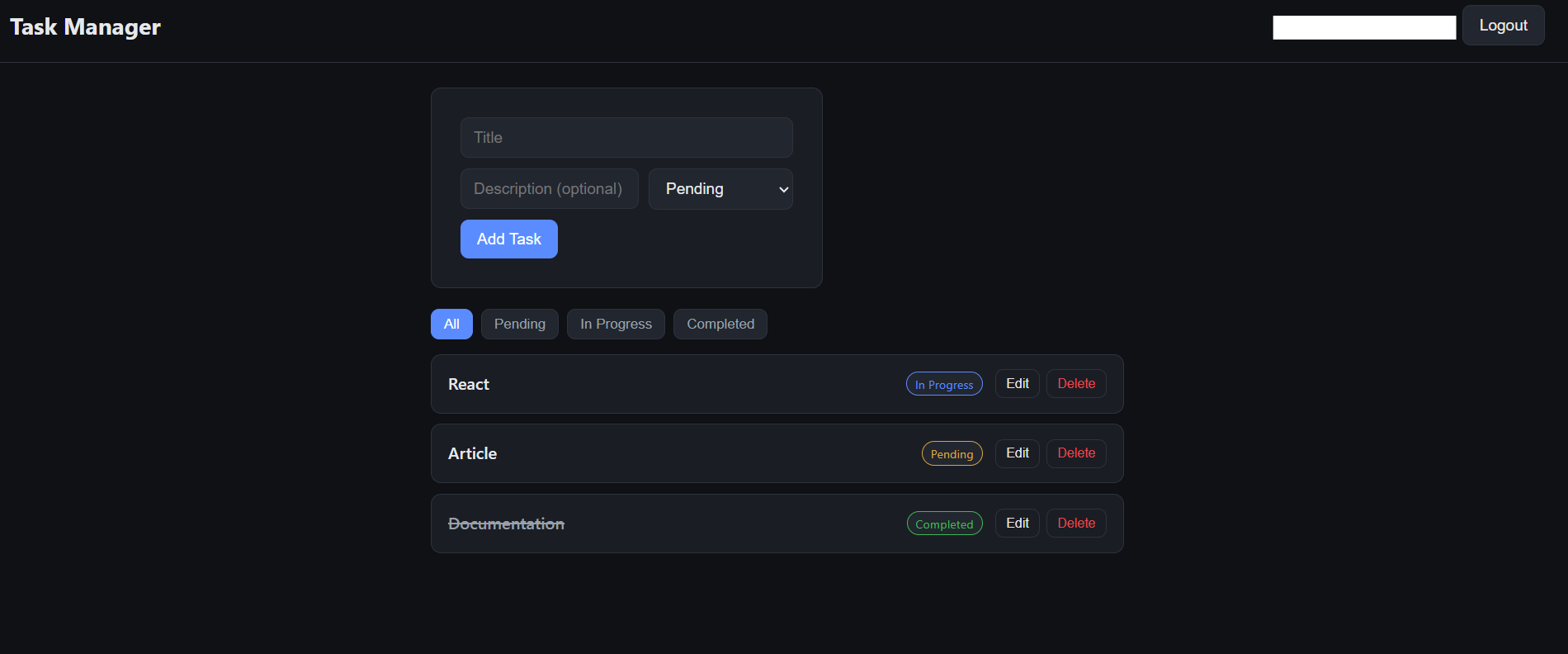
GLM 5.2 Outcome:
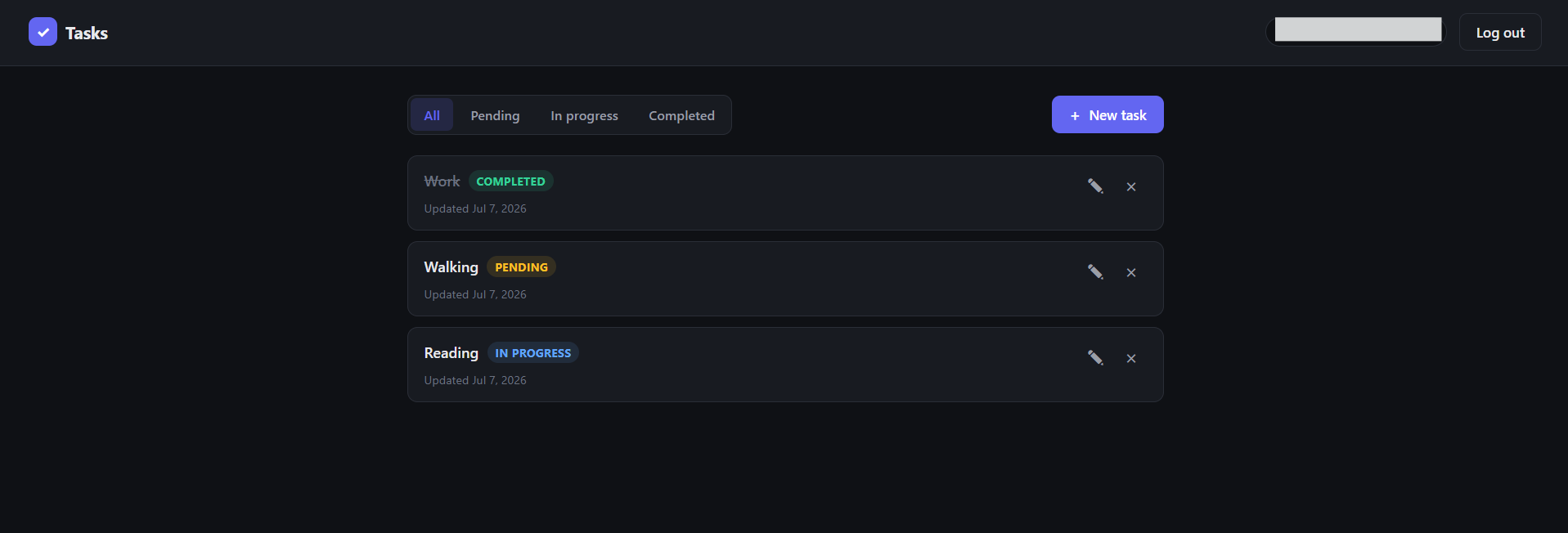
| Evaluation Metric | Kimi K2.7 | GLM 5.2 |
|---|---|---|
| Requirement Coverage | 14/15 | 14/15 |
| Architecture & Project Structure | 13/15 | 12/15 |
| Code Quality | 14/15 | 12/15 |
| Database & API Design | 12/15 | 10/15 |
| Overall Score | 53/60 | 48/60 |
Key Observations
- Kimi K2.7 generated a complete and runnable FastAPI project with a clean layered architecture and correctly implemented the requested API functionality.
- GLM 5.2 produced a well-structured codebase but omitted critical components, including the
Usermodel andAuthService, preventing the application from running successfully. - Both implementations demonstrated a good understanding of FastAPI and SQLAlchemy, although several requested features were only partially implemented.
- Overall, Kimi K2.7 produced the more complete and functional implementation for this task.
Task 2: Repository Analysis
Objective: Evaluate repository understanding, architectural reasoning, and cross-module analysis.
Prompt:
You are a senior software engineer. Analyze the provided Saleor repository and prepare an engineering review. Your review should include: 1. Explain the overall architecture.2. Describe the responsibility of the major modules.3. Trace the complete request flow for product creation from the API layer to database persistence.4. Identify architectural strengths.5. Identify potential bottlenecks or technical debt.6. Recommend improvements to improve scalability, maintainability, and developer experience. Do not summarize every file. Focus on explaining how the system works and support your observations with references to relevant modules and files.Results
| Evaluation Area | Kimi K2.7 | GLM 5.2 |
|---|---|---|
| Architecture Understanding | Good | Excellent |
| Module-Level Analysis | Good | Excellent |
| Request Flow Analysis | Good | Excellent |
| Technical Insights | Good | Excellent |
| Improvement Recommendations | Good | Excellent |
Key Observations
- Both models accurately identified Saleor as a GraphQL-first, Django-based headless e-commerce platform and explained its high-level architecture.
- Kimi K2.7 produced a well-structured engineering review with clear explanations of the major modules, request flow, architectural strengths, and scalability recommendations. The review focused on the overall system design and practical engineering observations.
- GLM 5.2 delivered a deeper repository analysis by referencing additional implementation details, internal components, GraphQL execution flow, DataLoader usage, extension mechanisms, and deployment architecture. The review also included more detailed discussions of technical debt and long-term maintainability.
- Both models provided relevant architectural recommendations, but GLM 5.2 demonstrated stronger repository comprehension and produced a more detailed engineering review for a large production codebase.
Overall Evaluation
The real-world evaluation highlighted different strengths across the two models. Kimi K2.7 performed better on code generation tasks, producing a more complete and functional implementation with cleaner project organization and better adherence to the requested requirements. Its output required fewer corrections and demonstrated stronger implementation consistency.
GLM 5.2 stood out in repository-level analysis. It provided a deeper understanding of the Saleor codebase by explaining the architecture, request flow, internal components, and potential technical debt in greater detail. The review also contained more comprehensive recommendations for scalability and long-term maintainability.
Overall, Kimi K2.7 is better suited for implementation-focused development tasks, while GLM 5.2 demonstrates stronger analytical capabilities when reasoning about large, complex codebases. The evaluation also shows that benchmark results alone do not fully capture real-world developer workflows, making practical testing an important part of selecting a coding model.
MCP & Agentic Development
Model Context Protocol (MCP) enables AI models to interact with external tools, repositories, databases, and development environments through a standardized interface. It serves as the foundation for agentic workflows that involve planning, tool execution, and iterative software engineering tasks.
Kimi K2.7 places a strong emphasis on MCP-enabled coding agents. Moonshot AI positions MCP workflows as a core capability and reports strong performance on MCP-related evaluations. The model also reduces reasoning-token usage by approximately 30% compared with Kimi K2.6, improving efficiency during multi-step coding workflows.
GLM 5.2 also supports agentic development through structured tool use and function calling. Public benchmark results demonstrate competitive performance on MCP-related evaluations, while its 1M-token context window enables agents to maintain context across large repositories and extended development sessions.
Both models support modern agentic software engineering workflows. Kimi K2.7 emphasizes reasoning efficiency and MCP-centric development, while GLM 5.2 combines agentic capabilities with large-context reasoning.
Long-Context & Repository Understanding
Long-context reasoning enables models to process large codebases, technical documentation, and multi-file projects within a single session, reducing the need for frequent context switching.
GLM 5.2 supports a 1M-token context window, enabled by DeepSeek Sparse Attention and IndexShare. Zhipu AI describes the model as maintaining stable performance across long contexts, although independent evaluations of retrieval quality at the full context length are currently limited.
Kimi K2.7 supports a 256K-token context window and focuses on improving reasoning efficiency within that context budget. Moonshot AI emphasizes efficient repository reasoning and reduced reasoning-token usage over expanding the maximum context length.
For many software engineering tasks, including bug fixes, feature development, and code reviews, a 256K-token context window is already sufficient. Larger context windows become more valuable for monorepos, documentation-heavy projects, and long-running agentic workflows where a significantly larger portion of the codebase must remain in context simultaneously.
Multimodal Development
Multimodal capabilities enable coding models to process images alongside text, supporting workflows that extend beyond traditional code generation.
Common Capabilities
- Generate code from UI mockups and design screenshots.
- Interpret architecture diagrams and flowcharts.
- Analyze technical documentation containing text and images.
- Assist with screenshot-based debugging and UI issue identification.
Kimi K2.7
- Accepts text, image, and video inputs through the MoonViT vision encoder.
- Supports multimodal coding workflows that combine visual context with agentic software engineering tasks.
GLM 5.2
- Supports text and image inputs for multimodal reasoning and software engineering.
- Combines multimodal understanding with its 1M-token context window, enabling analysis of large documentation sets and visually rich development workflows.
Moonshot AI has disclosed the vision component used in Kimi K2.7, while Zhipu AI has not published equivalent implementation details for GLM 5.2. Independent comparisons of multimodal coding performance are currently based primarily on hands-on evaluations rather than standardized benchmarks.
Deployment, Performance & Pricing
Deployment decisions depend on more than coding capability. API pricing, model size, inference speed, and self-hosting requirements all influence the total cost of ownership.
| Feature | Kimi K2.7 | GLM 5.2 |
|---|---|---|
| Deployment | API, self-hosting | API, self-hosting |
| Context Window | 256K tokens | 1M tokens |
| Input Price (Official API) | $0.95 / 1M tokens | $1.40 / 1M tokens |
| Cached Input | $0.19 / 1M tokens | $0.26 / 1M tokens |
| Output Price (Official API) | $4.00 / 1M tokens | $4.40 / 1M tokens |
| Subscription | Not available | Coding Plan subscriptions available |
| Model Weights | ~595 GB (Hugging Face) | Not officially disclosed |
| Quantization | Native INT4 support | Not publicly documented |
The pricing shown above reflects the vendors' official API rates. Third-party inference providers, including model routing platforms, may offer different pricing depending on their infrastructure, routing policies, and promotional offers.
Kimi K2.7 combines lower official API pricing with native INT4 quantization, making it attractive for high-volume coding workloads. Independent evaluations have also noted that the standard model can be slower and more verbose than similarly sized open-weight models, although Moonshot AI provides a high-speed variant for latency-sensitive workflows.
GLM 5.2 provides a 1M-token context window and supports both pay-as-you-go API pricing and Coding Plan subscriptions. Subscription tiers and promotional pricing have changed since launch, so organizations evaluating the model should verify the current plans directly through Z.ai before making cost comparisons.
Zhipu AI has not published detailed quantization or minimum hardware guidance, and self-hosting either model is expected to require substantial multi-GPU infrastructure due to their scale.
Compliance & Operational Considerations
Organizations evaluating open-weight coding models should consider deployment, licensing, and regulatory requirements alongside model performance.
- Licensing: GLM 5.2 is released under the MIT License, while Kimi K2.7 uses a modified MIT License that includes attribution requirements. Teams planning to redistribute or integrate either model into commercial products should review the official license terms before deployment.
- Export Controls: Zhipu AI, the developer of GLM 5.2, has been listed on the U.S. Entity List since January 2025. Organizations operating under U.S. export-control regulations or related compliance frameworks should evaluate any legal and procurement implications before adoption.
- Self-Hosting: Both models support self-hosted deployments. However, neither vendor publishes minimum hardware requirements, and their large model sizes make multi-GPU infrastructure a practical requirement for production deployments.
Operational requirements vary across organizations, making licensing, infrastructure, and regulatory compliance important considerations alongside benchmark performance and coding capabilities.
Which Model Should You Choose?
The better choice depends on your development workflow, infrastructure requirements, and deployment priorities. Both models target software engineering, but their strengths align with different use cases.
| Use Case | Recommended Model | Reason |
|---|---|---|
| Large codebases and monorepos | GLM 5.2 | Supports a 1M-token context window for repository-scale reasoning. |
| Agentic coding workflows | Kimi K2.7 | Optimized for MCP-enabled development and reasoning efficiency. |
| Cost-sensitive API deployments | Kimi K2.7 | Lower official API pricing reduces inference costs. |
| Documentation-heavy projects | GLM 5.2 | Larger context window accommodates extensive documentation. |
| Autonomous software engineering | Both | Both models support structured tool use and multi-step coding workflows. |
| Commercial self-hosting | Depends on deployment requirements | Evaluate infrastructure, licensing, and compliance before adoption. |
At the time of writing, both models represent strong open-weight options for software engineering. Kimi K2.7 emphasizes reasoning efficiency, MCP-enabled workflows, and lower API costs, while GLM 5.2 offers a significantly larger context window and balanced performance across software engineering tasks.
The final choice should also consider real-world evaluation results, since benchmark scores and architectural differences do not always translate directly into production performance.
Conclusion
Kimi K2.7 and GLM 5.2 take different approaches to software engineering, and both deliver strong coding capabilities. Kimi K2.7 stands out for reasoning efficiency, MCP-enabled agentic workflows, and lower API costs, while GLM 5.2 excels in long-context reasoning with its 1M-token context window and balanced software engineering performance.
Our benchmark analysis and real-world evaluation show that each model performs well in different development scenarios. The better choice depends on your workflow, infrastructure, and deployment requirements. Teams building coding agents and cost-sensitive automation may prefer Kimi K2.7, while teams working with large repositories, extensive documentation, and long-running development sessions may benefit more from GLM 5.2.
As open-weight coding models continue to evolve, both models provide compelling options for developers seeking high-quality code generation, reasoning, and agentic software engineering capabilities.