
Unsiloed AI vs Airbyte: Which is Better in April 2026?
Searching Airbyte versus Unsiloed AI puts you in a weird position because these tools solve fundamentally different problems. Airbyte connects systems and moves structured data between them. Unsiloed takes unstructured documents and makes them readable for AI agents and LLMs. Both matter if you're b


Searching Airbyte versus Unsiloed AI puts you in a weird position because these tools solve fundamentally different problems. Airbyte connects systems and moves structured data between them. Unsiloed takes unstructured documents and makes them readable for AI agents and LLMs. Both matter if you're building data pipelines, but only one was designed to handle the PDFs, scanned images, and layout-heavy files that your RAG system or agent workflow depends on. This post walks through what each tool was actually built for, where the real differences show up in production, and how to pick the right one based on what's breaking in your stack right now.
TLDR:
- Airbyte moves structured data between systems; Unsiloed AI parses complex documents into LLM-ready formats.
- Generic text extraction fails on tables and layouts. Unsiloed provides confidence scores and citations.
- You can deploy via REST API in hours with zero infrastructure management required.
- Unsiloed AI processes documents for Fortune 150 banks with vision-first, layout-aware parsing.
SEO Optimized Outline: Unsiloed AI vs Airbyte: Which is better in April 2026?
Airbyte moves data between systems. Unsiloed AI reads documents. Those two sentences might make you wonder why anyone is comparing them at all, and that's exactly the right question to ask.
The confusion makes sense on the surface. Both tools sit somewhere in the data pipeline. Both matter to engineers building AI-powered workflows. But the problems they solve are genuinely different, and choosing the wrong one for the wrong job creates real pain downstream.
This post breaks down what each tool actually does, where each one fits, and why the distinction matters more than most comparison articles let on. If you're trying to get unstructured documents into a reliable AI pipeline, read on.
What is Airbyte?
Airbyte is an open-source data integration tool built to move structured and semi-structured data between systems: databases, SaaS APIs, cloud storage, and data warehouses. With over 600 connectors, it covers a wide range of sources and destinations, making it a common choice for teams centralizing business data into analytics infrastructure.
The core workflow is ELT: extract data from a source, load it into a destination, and process it there. It supports both batch syncs and change data capture (CDC) connectors, so teams can keep warehouses and data lakes current as production systems update.
Where documents come in is worth flagging. Airbyte does offer basic text extraction through an integration with the Unstructured.io library, but this is a secondary capability grafted onto what is fundamentally a pipeline-movement tool. It was not built to understand document layouts, handle tables inside PDFs, or produce structured outputs that AI agents can reliably consume.
Organizations reach for Airbyte when they need to consolidate business data from Postgres, Salesforce, or Stripe into somewhere like Snowflake or BigQuery. That is the job it was designed for.
What is Unsiloed AI?
Unsiloed AI builds the unstructured data interface for LLMs and AI agents. Where the competitor moves rows between systems, Unsiloed turns documents into something AI can actually read and act on.
The core of what Unsiloed does is vision-first, layout-aware parsing. The systems combine computer vision, OCR, and multimodal models to produce deterministic, machine-readable representations from documents that generic text parsers routinely get wrong. PDFs with dense tables, scanned forms, multi-column layouts, embedded charts: these are exactly the cases Unsiloed was built for.
The APIs cover four core operations:
- Parse documents into structured, hierarchical Markdown and JSON while preserving reading order, layout, and visual elements
- Extract structured data using custom JSON schemas, with confidence scores, word-level citations, and bounding boxes for every field
- Classify documents by type using visual and semantic signals to route them to the right downstream pipeline
- Split large or mixed-file batches into logical sections for processing or routing
Every output is built to be consumed directly by LLMs, AI agents, or RAG pipelines without manual cleanup. PDFs, PowerPoint files, Word documents, Excel spreadsheets, images, and 20+ formats are all supported.
"The accuracy, particularly for tables, is great. We tried 15+ closed and open-source solutions in total. Unsiloed was the only one that seemed to work effectively." - Head of AI, Fortune 150 Bank
Teams at Fortune 150 banks, NASDAQ-listed companies, and over 10 YC startups use Unsiloed to process millions of document pages each week across finance, legal, and healthcare.
Document Processing Capabilities
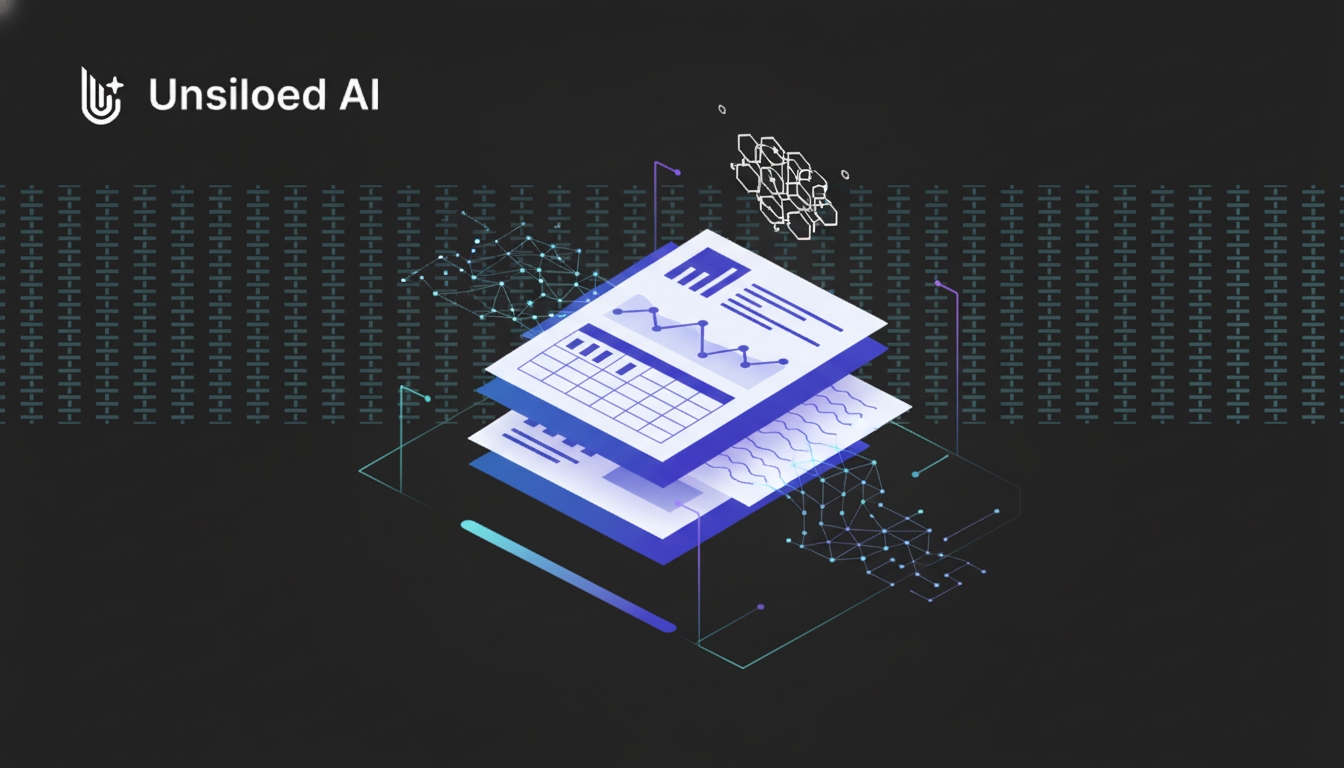
The gap between these two tools becomes most visible when you put a real document in front of them.
Airbyte
Airbyte uses the open-source Unstructured library to pull text from PDFs and Word files, emitting extracted content as markdown to preserve basic structure like headings and lists. This works well enough for straightforward ingestion scenarios: files sitting in S3, Azure Blob Storage, or Google Drive that need to land in a vector database or warehouse.
The limitations show up fast with anything more complex. complex document formats are known weak points for generic text extraction. There are no confidence scores, no bounding boxes, and no word-level citations on extracted content. Output quality is bounded entirely by what the Unstructured library can produce, which was not designed for production accuracy on layout-dependent documents.
Unsiloed AI
Our parsing is built to handle the documents that break generic extractors. The dual-stream architecture processes semantic content and structural layout cues at the same time, so a dense financial table or a multi-column legal filing gets parsed with the same fidelity as plain body text.
Every parsed segment comes with confidence scores, pixel-level bounding boxes, page numbers, and OCR-level word citations. Our domain-aware decoders for finance, healthcare, and legal preserve the context and hierarchy that matters for downstream AI tasks. Output is Markdown and JSON ready for RAG chunking or agent consumption, with no manual cleanup required. We consistently outperform LlamaIndex, Gemini, Mistral, and Unstructured.io on public benchmarks for complex document accuracy.
| Capability | Airbyte | Unsiloed AI |
| Underlying tech | Unstructured.io library | Proprietary vision model |
| Table extraction | Limited | Native, layout-aware |
| Confidence scores | No | Yes, per segment |
| Bounding boxes | No | Word-level coordinates |
| Domain-specific decoding | No | Finance, legal, healthcare |
| Scanned document support | Basic OCR | Vision-first parsing |
Data Extraction and Structure
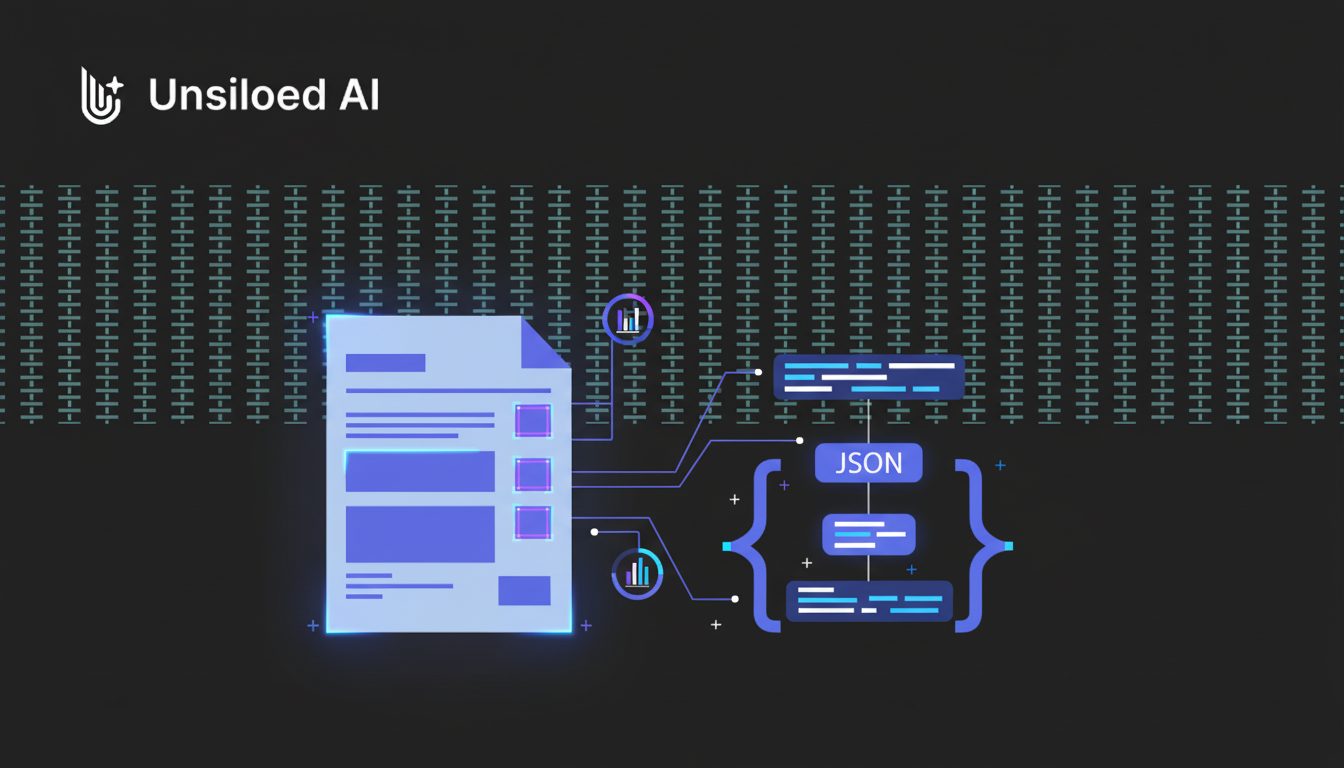
Extraction is where the architectural differences between these two tools get concrete.
Airbyte excels at pulling structured records from live data sources. Its 600+ connector catalog covers databases, SaaS APIs, and warehouses well. For document files, the story is different. The output is raw markdown text from the Unstructured library, with no schema-based extraction layer on top. You cannot define a JSON schema to pull invoice totals, contract dates, or regulatory filing data from a PDF and get back validated, field-level results. The tool was built for row-level data movement, and document intelligence is a gap it was never designed to fill.
Unsiloed AI
Our Extraction API works differently. You define a JSON schema specifying exactly which fields you need, and we return structured JSON where each field carries its extracted value, a confidence score between 0 and 1, the page number it came from, and both segment-level and OCR-level bounding boxes pointing to the exact words in the source document.
This dual-level citation is what makes outputs production-safe. Unlike generic LLMs that hallucinate on structured documents, the extraction is deterministic. Schemas are strict by default. Teams processing invoices, SEC filings, medical records, and compliance documents rely on this for exactly that reason.
Integration and Deployment
Deployment model is often where a tool's real cost becomes clear.
Airbyte
Self-hosted Airbyte requires meaningful engineering investment upfront and ongoing. Kubernetes and Docker expertise are prerequisites, and infrastructure management, monitoring tooling, and connector maintenance add continuous DevOps overhead. Connector quality also varies across the ecosystem: community connectors in particular may not meet enterprise-grade reliability standards, which creates risk in production. Airbyte Cloud reduces some of that burden, but organizations with data sovereignty requirements still need self-hosted deployments. Separate transformation tools like dbt are required for data modeling, adding another dependency to manage.
Unsiloed AI
Our REST API requires zero infrastructure management on your end. No Kubernetes, no container orchestration, no ongoing maintenance. You send documents, we return structured results with deterministic schemas.
For teams with compliance or data sovereignty requirements, we offer on-premise and air-gapped deployments that maintain the same API interface with full control over data processing and storage. SOC 2 compliance, end-to-end encryption, and strict access controls are standard. Most teams go from signup to production in hours.
Use Case Fit and Target Scenarios
Two distinct use cases, two distinct tools. Knowing which one applies to your situation saves real time.
When the competitor fits your needs
You need to consolidate structured business data from sources like Salesforce, Stripe, or PostgreSQL into a warehouse like Snowflake or BigQuery. If your primary need is broad connector coverage for traditional data integration, with only occasional and straightforward document text extraction, it covers that well. It was built for row-level data movement, and that's where it performs.
When Unsiloed AI fits your needs
Your pipeline depends on documents. Finance teams processing SEC filings, legal teams extracting contract obligations, healthcare organizations structuring clinical records, and AI engineering teams building RAG pipelines or agentic workflows all share the same core problem: generic text extraction breaks on real-world documents.
Unsiloed AI sits as the infrastructure layer before your LLMs, making sure every document is parsed correctly before it reaches your pipeline. If layout matters and errors are costly, that's where we operate.
Why Unsiloed AI is the Better Choice
Airbyte is a solid tool for what it was built to do: moving structured records between databases, APIs, and warehouses. If that's your problem, it solves it well.
But if your pipeline runs on documents, the comparison stops being relevant. Unsiloed AI was built for exactly the cases where generic extraction fails: dense tables, scanned pages, complex layouts, and accuracy-sensitive domains where errors carry real cost. Vision-first parsing, schema-driven extraction with confidence scores and citations, and deterministic outputs are the foundation teams need before any LLM or agent ever sees the data.
If documents are in your stack, book a demo to get started.
Final Thoughts on Airbyte and Unsiloed AI
The Airbyte vs Unsiloed AI comparison only makes sense if you know which data type you're working with first. Row-level database syncs and SaaS API integrations are where Airbyte performs, but documents with meaningful structure require different infrastructure entirely. We designed Unsiloed to sit upstream of your LLMs and agents, making sure every PDF, scanned form, and complex layout gets parsed correctly before it reaches your pipeline. Your documents either need vision-first parsing or they don't. Book time with our team if you're dealing with the former.
FAQ
How do I decide between the two tools if I have both database records and documents to process?
Use the data integration tool for structured records from databases and SaaS APIs, and Unsiloed AI for documents that require layout-aware parsing. Most teams run both in parallel: one for moving rows between systems, the other for turning PDFs and scans into reliable AI inputs.
What's the main difference in how each tool handles PDF files?
The data integration tool uses a generic text extraction library that works for simple documents but struggles with tables, multi-column layouts, and scanned pages. Unsiloed AI uses vision models that understand document structure natively, producing deterministic outputs with confidence scores and word-level citations for every extracted field.
Who should use Unsiloed AI instead of a traditional data pipeline tool?
Teams building RAG pipelines, vertical AI products, or document automation in finance, legal, or healthcare where extraction accuracy directly impacts business outcomes. If your documents have complex layouts and errors are costly, that's where we fit.
Can I migrate existing document workflows without rebuilding my infrastructure?
Yes. Unsiloed AI is a REST API that integrates directly into your existing pipeline with no infrastructure management required. For teams with compliance requirements, we offer on-premise deployments that maintain the same API interface while keeping data in your environment.
What happens if the extraction confidence score is low on a specific field?
Each extracted field includes a confidence score between 0 and 1, plus bounding boxes pointing to the exact source location in the document. You can set thresholds to flag low-confidence extractions for human review, which is how teams maintain accuracy in production without manual processing of every document.